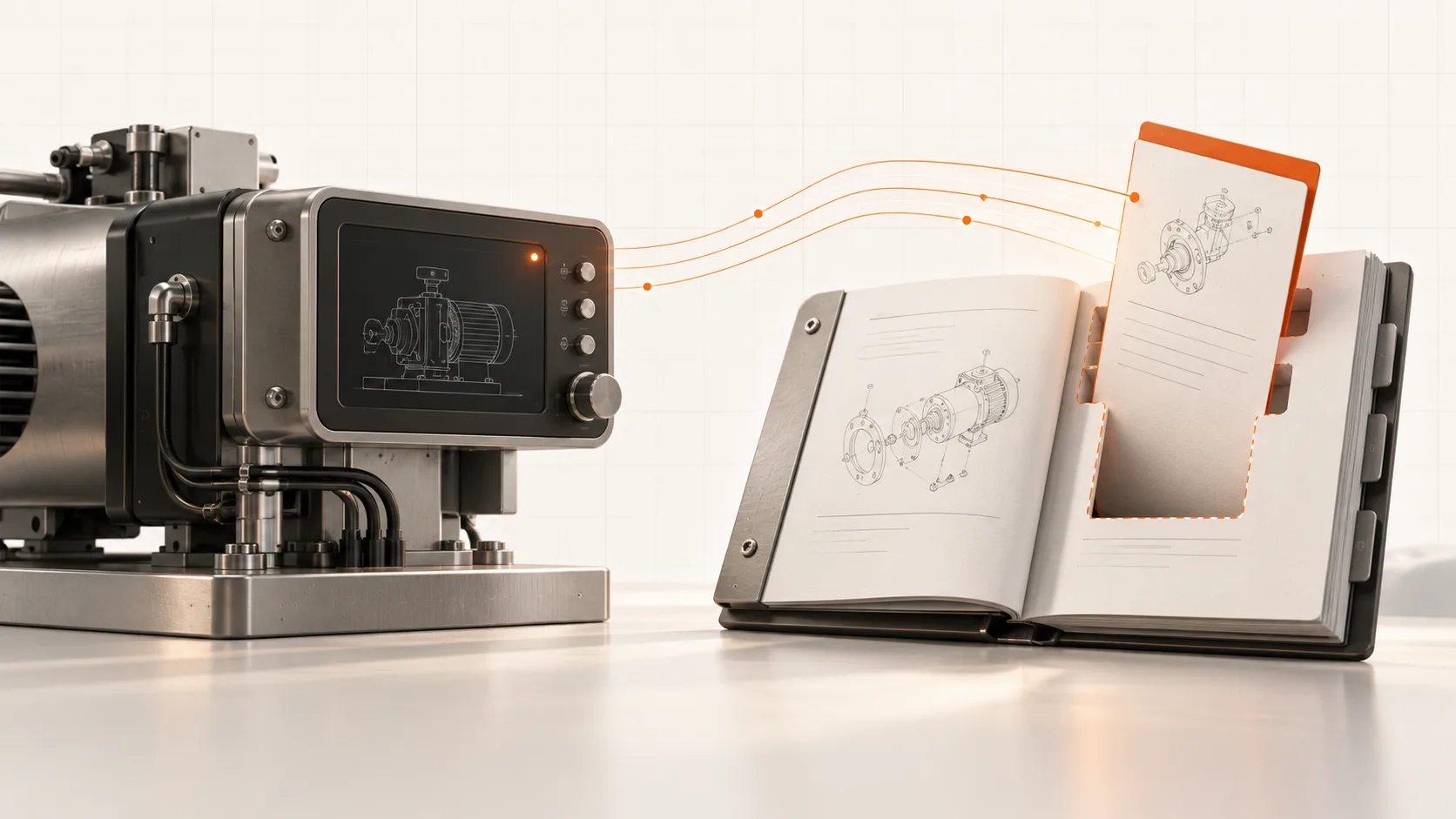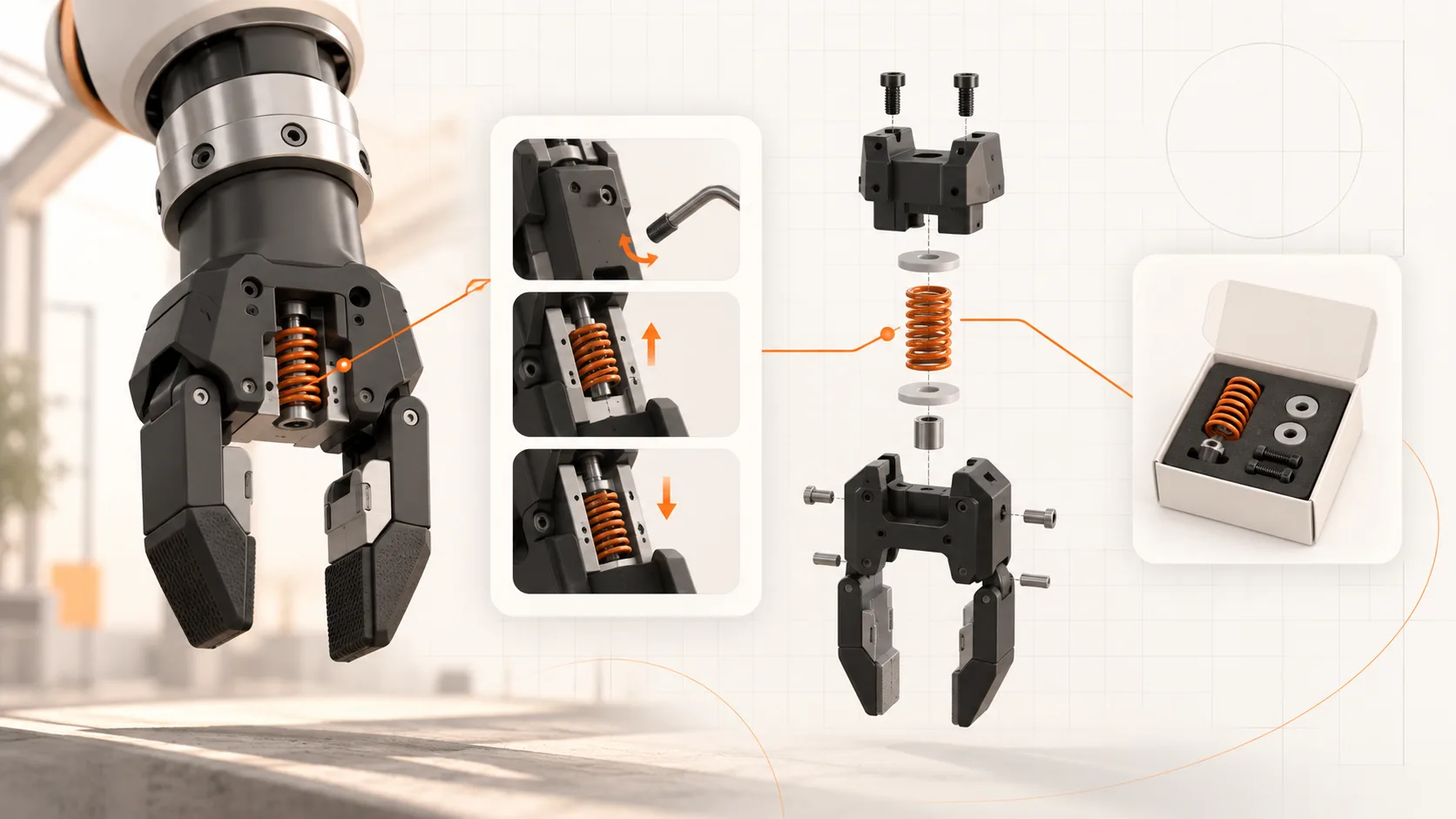
A machine sends more data than ever, yet the service team still has a basic question after an alert: what happened, and what should we do next?
Predictive maintenance has to connect those two things. Detecting an unusual signal is useful only if the team can investigate it and take an appropriate action.
For an OEM, that means working on service information alongside the analytics.
Define the failure you want to address
"Predict machine failures" is too broad for a useful first project.
Choose a component and a failure mode with a meaningful operational consequence. Identify the measurements that might reveal a developing issue, the intervention available, and how much warning the service team would need.
Also establish the existing maintenance approach. An analytics project should be compared with the inspections, thresholds, or scheduled work already in use.
Check whether machines are comparable
Machines of the same model can operate under different loads, recipes, speeds, and environments. Sensors and software revisions may also differ.
Record that context before combining the data. A change in a signal may reflect a production change or a sensor problem rather than component deterioration.
Check units, timestamps, sampling, and gaps. Missing readings should not silently become evidence of normal operation.
A smaller set of well-understood machines can provide a more useful pilot than a large mixed dataset whose history is unclear.
Improve the service outcome record
An alarm code records an event. It does not necessarily identify the failed component or the cause.
Service records should distinguish the symptom, inspection finding, confirmed cause where known, work performed, parts replaced, and observed result. Keep "cause unknown" available as an honest outcome.
A closed ticket may mean production resumed. It does not by itself establish that a particular repair solved the underlying issue.
These records help engineers evaluate alerts and improve the response process, whether or not machine learning is involved.
Sparse failure labels do not rule out every method
Supervised failure models need suitable examples and labels. Other approaches can identify unusual observations without a complete catalog of labeled failures. Outlier detection and models of normal behavior are established examples. Scikit-learn's anomaly detection documentation.
The limitation remains practical: unusual does not automatically mean faulty, and an anomaly score does not necessarily predict remaining life.
The team still needs a way to investigate alerts and establish their usefulness. Limited failure history changes how the project should be designed and evaluated.
Define the response before expanding the alerts
For the selected use case, identify who receives an alert, which checks they should perform, which procedure applies, and when to escalate.
Connect the response to the correct machine configuration and parts information. Record what the technician found so the next review has more than a signal trace.
Keep diagnostic uncertainty explicit. An alert should not turn an unconfirmed diagnosis into an automatic parts replacement.
Evaluate on future service work
Test whether the approach provides useful warning on later data, and on other machines where that is part of the intended use.
Track missed events, unnecessary investigations, lead time, and the cost of the response. Include service effort and customer disruption when assessing the result.
A useful first step may be better monitoring and a clearer response procedure. That creates value while the evidence for more advanced prediction develops.
Soply can help organize the documentation and parts information needed after an alert. Explore a documentation workflow for one service scenario and make the response usable before scaling the analytics.