Your service engineer has answered the same question three times this week. Each customer needed the same approved specification, but none found it in the manual.
That is a useful place to start improving self-service. The goal is to make routine answers easier to find while keeping service available for questions that need judgment.
For machine builders, support deflection should mean a customer gets appropriate help without an unnecessary ticket. A closed contact form or an overconfident chatbot does not achieve that.
Read the queue before rewriting the manual
Take a defined period of tickets for one product line. Group repeated questions by task, fault, component, or specification.
Ask why each customer contacted you. The answer may be missing from the documentation, hard to locate, unclear, outdated, or inapplicable to their configuration. The user may also be right to ask for qualified support.
Separate these causes. Sometimes a better heading and search term are enough. Sometimes the underlying instruction needs an engineering review. Sometimes the correct answer remains "contact service."
Choose questions that can be answered responsibly
Start with a few recurring topics where an approved answer exists or can be produced.
For each one, define the audience, applicable machinery, prerequisites, and escalation point. Include the technical source and a reviewer who can confirm the content.
Do not turn a hazardous or ambiguous diagnostic situation into a universal reset instruction just because it generates tickets. The documentation should tell users when the task is outside their authorization or competence.
Write for the question the technician has
Put the answer near the beginning. Use the machine's terminology and explain abbreviations the customer may not know.
For a procedure, provide the relevant steps and completion check. For part identification, show how to distinguish the correct item and confirm applicability. For a specification, preserve units, conditions, and its approved source context.
Keep these answers connected to the full instructions. Short task pages are useful entry points, not a reason to omit necessary context.
Put the answer where customers look
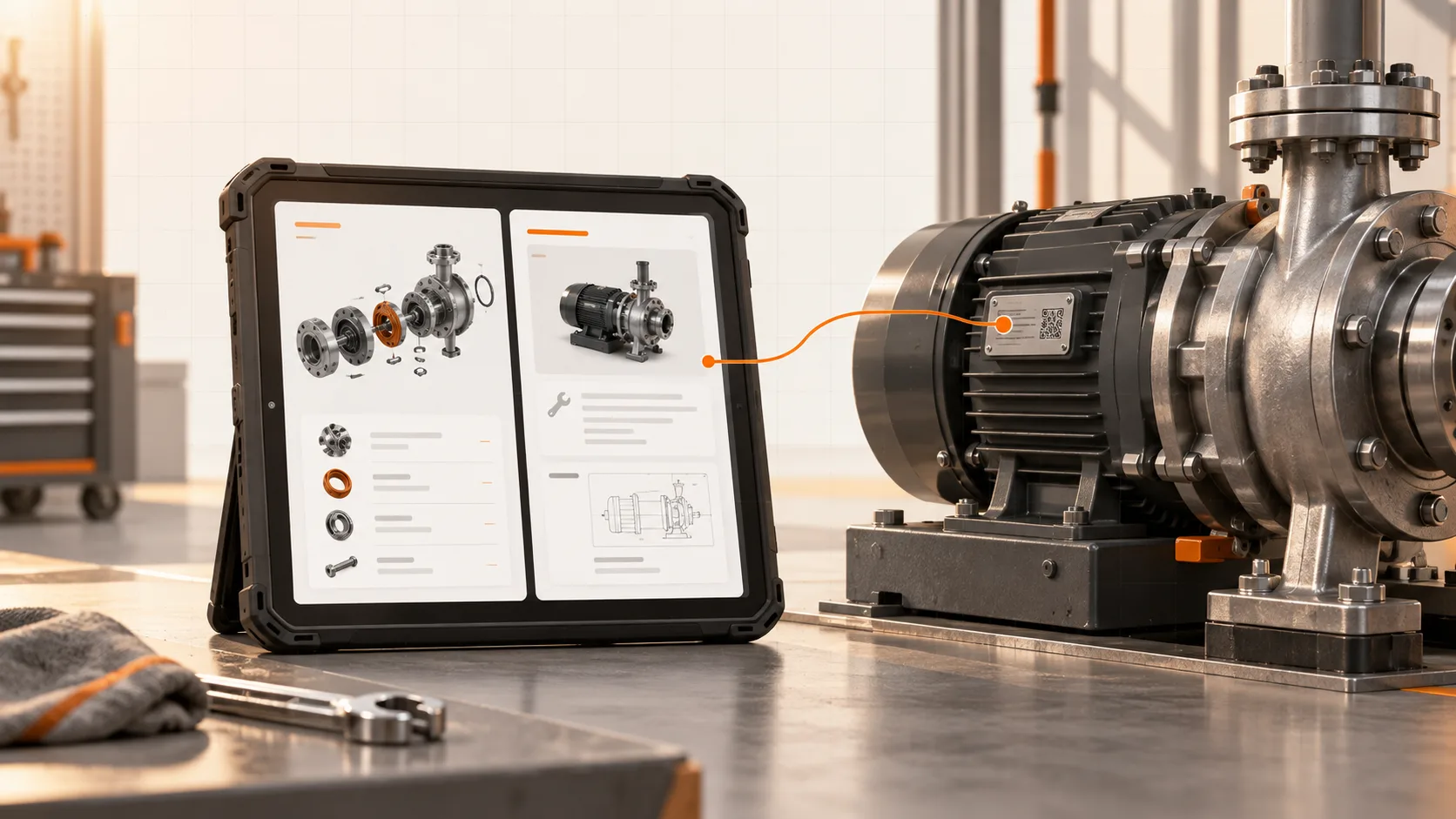
A documentation portal can provide machine-specific access through an asset record, a link, or a suitable label on the equipment. Search should recognize the wording customers use, including fault messages and familiar component names.
Check the experience on the customer's device and in the required language. A technically correct answer that is awkward to open is unlikely to reduce the next call.
When the user still needs help, offer a clear escalation route. Include the machine and document context where the workflow supports it.
Measure resolution, not disappearance
Track tickets for the selected topics against a consistent baseline. Account for changes in the active fleet or operating exposure.
Pair ticket volume with repeat contacts, reopened issues, customer feedback, and time to find an answer. A document view followed by silence does not prove a successful resolution.
Also distinguish self-service resolution from assisted resolution. A support engineer sending a useful documentation link can shorten a conversation even though it did not prevent the initial ticket. Both outcomes can matter.
Give the answers an owner
Review recurring questions with service and documentation owners. If a topic remains common after publication, investigate findability, applicability, and the instruction itself.
Soply helps turn recordings and existing material into reviewed procedures and customer documentation. The service queue supplies the priorities; qualified reviewers supply the facts.
Bring your most repeated questions to a demo. Build the first pilot around a few answers customers can actually use, then measure what changes.