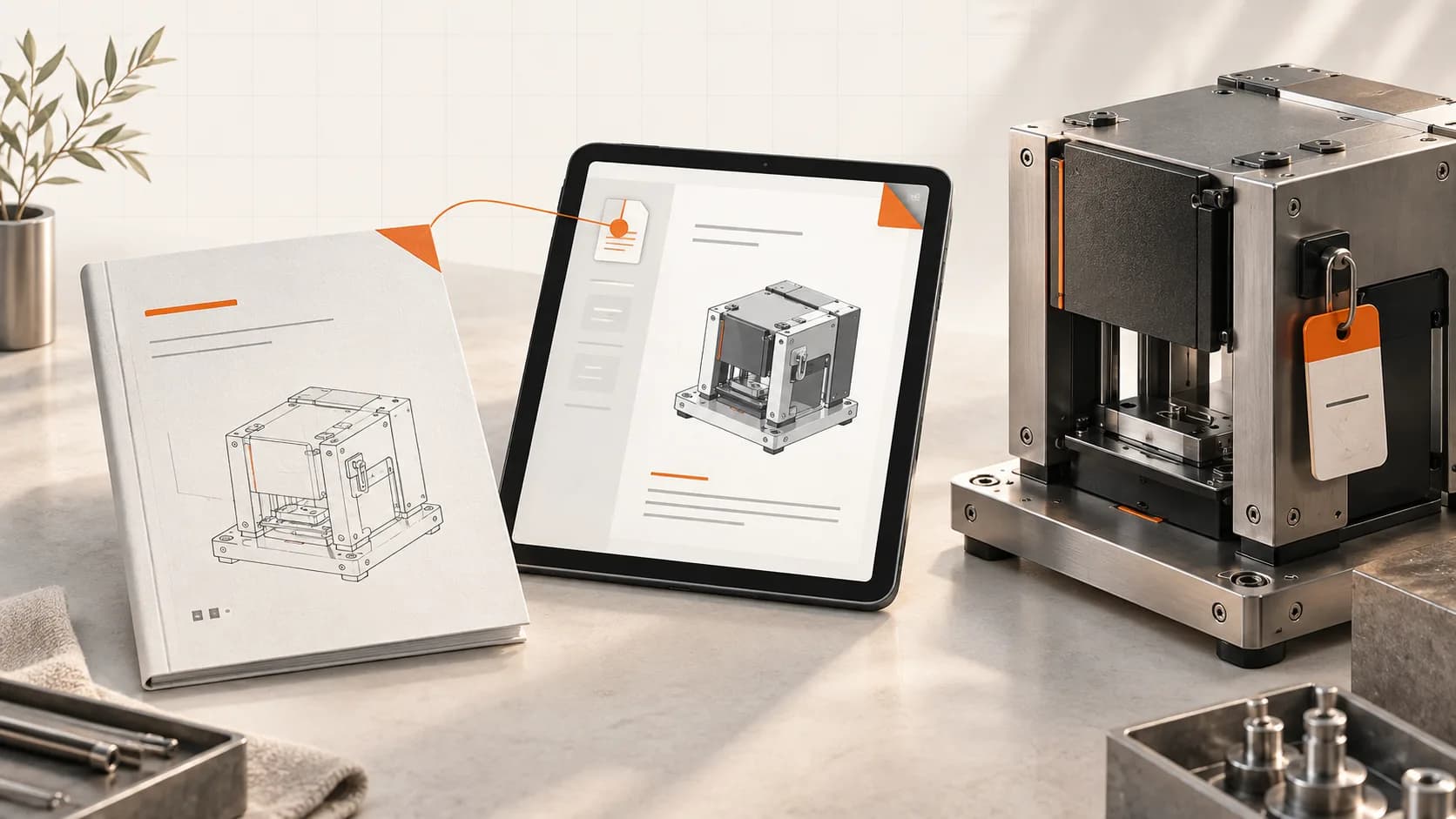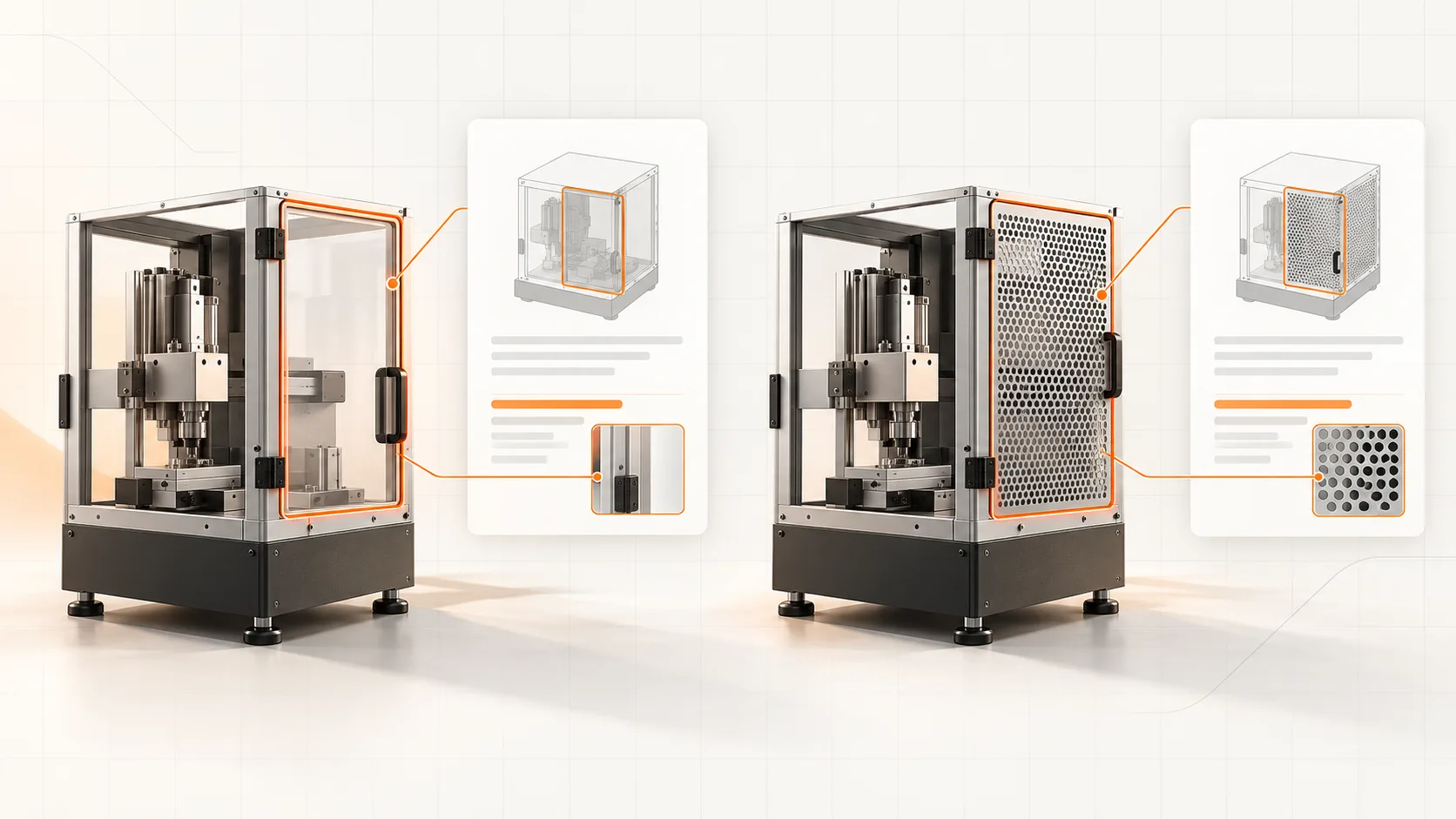
A guard changes during commissioning. Engineering updates the drawing, but the risk-assessment record still refers to the previous arrangement. The manual carries the old illustration.
Each document exists. The difficulty is showing that they describe the same machine.
Machinery risk assessment has long been part of the manufacturer's responsibilities. Regulation (EU) 2023/1230, generally applicable from 20 January 2027, continues to require an assessment and supporting technical documentation. The practical challenge is keeping the evidence and instructions aligned with the machinery covered by them. Current regulation.
Begin with the configuration being assessed
A product-family assessment can contain reusable work. It still needs to address the relevant configuration, intended use, and applicable hazards.
Record the options and changes that affect the assessment: guarding, control functions, operating modes, interfaces, and other relevant characteristics. Identify the drawings, specifications, and software information used as evidence.
Avoid assuming that a serial number alone proves traceability. Someone needs to be able to connect that identifier to the actual configuration and the records supporting it.
Connect the assessment to the instructions
Annex III describes the risk-assessment process and the priority of protective measures. Annex IV, Part A requires documentation showing the assessment, applicable requirements, implemented protective measures, and residual risks where appropriate.
Customer instructions are one of the outputs of that work. Where users need information about remaining risks or required protective measures, it must reach the relevant instructions.
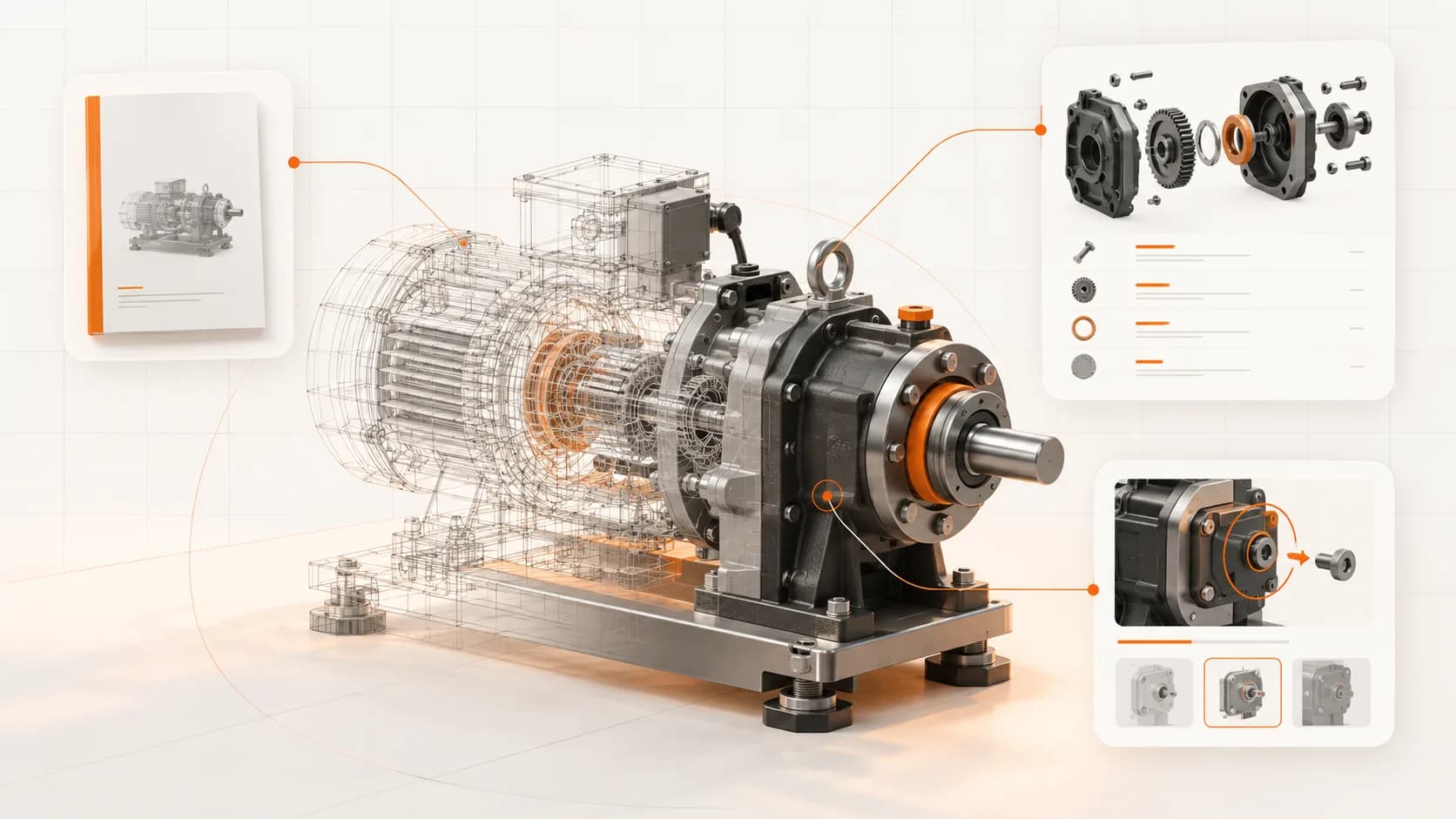
A practical review record connects a risk or requirement to its measure, supporting evidence, and any affected instruction. It should be possible to follow that relationship without relying on the memory of the engineer who wrote it.
Warnings are not a replacement for required risk reduction through design and protective measures.
Make changes trigger the right review
Include documentation impact in the engineering change process.
A reviewer should ask whether the change affects hazards, operating limits, protective measures, maintenance access, instructions, or the applicability of existing evidence. Record the decision even when no instruction needs changing.
For a changed residual risk, identify the affected customer content and translations. For a changed component, check whether the illustration and service procedure still describe the task accurately.
This does not mean every minor edit requires rebuilding the whole assessment. It means someone competent decides and records the scope of the review.
Handle field modifications case by case
The regulation defines substantial modification and assigns manufacturer obligations to a person carrying out such a modification in the circumstances it describes. Physical and digital changes can be relevant. A repair, retrofit, or software update is not automatically substantial merely because it occurred after shipment.
Keep the original release and the subsequent change record. Assess the specific modification, its effect on safety, and which machinery is affected. Do not use a generic marketing checklist to decide a complex legal boundary.
Retain evidence that another person can follow
Article 10(3) requires the technical documentation and declaration to remain available to market surveillance authorities for at least ten years after market placement or putting into service.
Operationally, version history, named reviewers, accessible source files, and clear configuration records help meet the evidence needs. Those are useful controls; software-generated timestamps alone do not establish that the assessment was adequate.
Try retrieving an older machine's records with someone who was not involved in its delivery. Missing files and unexplained references will become obvious.
Start with one change
Choose a real engineering change and trace it through the assessment, supporting evidence, and customer instructions. That gives you a concrete test of the process.
Soply can support the documentation and review workflow around those records. The technical assessment and conformity decisions remain with the responsible specialists.
Arrange a documentation review demo using one representative machine.
This article provides general information. Assess specific products and modifications with an appropriately qualified machinery-safety or conformity specialist.